
THINK GOOD, TALK GOOD, AND DO GOOD, YOU BE FINE
According to some experts in the United States, more than 10% of the waste stream in the US are plastics. Most plastics are made using natural gas or some other kind of petro-chemical product. The more plastics used – the more petroleum products are needed.
When plastics are recycled, they are usually down cycled; that is, they are used to make a lower quality form of plastic. For example, the plastic water bottle cannot be recycled into a plastic bottle again. Instead, the resins from plastic bottles are used to make products like insulating fill for winter jackets and so on.
Common products that are made from recycled plastics are: toys, auto parts, plastic pipes, cloth fibers, tables, and many other products.
Click the tabs below to learn more about different types of plastics, and their properties and applications:
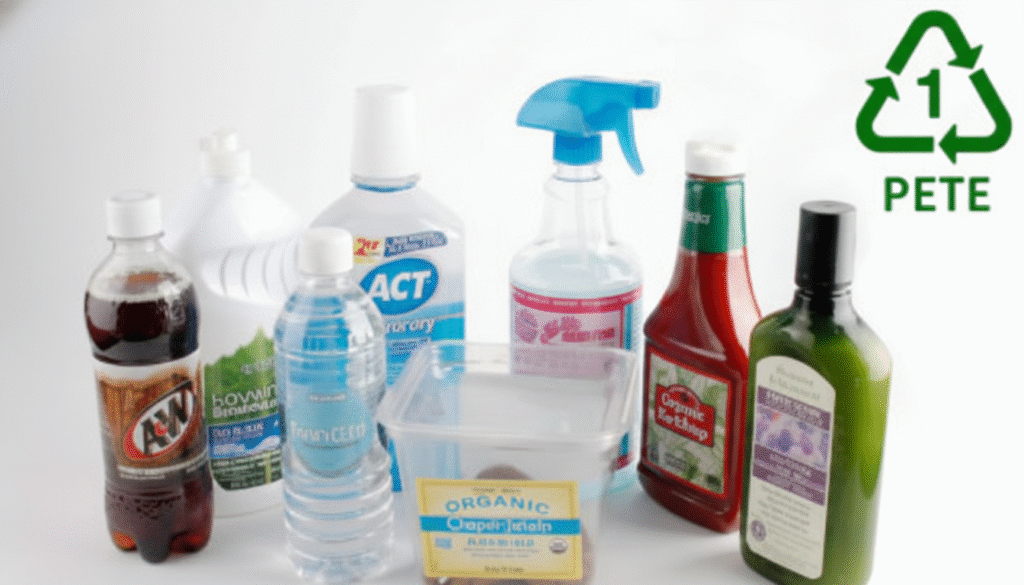
Because PET is an excellent water and moisture barrier material, plastic bottles made from PET are widely used for soft drinks (see carbonation). For certain specialty bottles, such as those designated for beer containment, PET sandwiches an additional polyvinyl alcohol (PVOH) layer to further reduce its oxygen permeability.
Biaxially oriented PET film (often known by one of its trade names, “Mylar”) can be aluminized by evaporating a thin film of metal onto it to reduce its permeability, and to make it reflective and opaque (MPET). These properties are useful in many applications, including flexible food packaging and thermal insulation such as “space blankets”. Because of its high mechanical strength, PET film is often used in tape applications, such as the carrier for magnetic tape or backing for pressure-sensitive adhesive tapes.
Non-oriented PET sheet can be thermoformed to make packaging trays and blisters. If crystallizable PET is used, the trays can be used for frozen dinners, since they withstand both freezing and oven baking temperatures. As opposed to amorphous PET, which is transparent, crystallizable PET or CPET tends to be black in colour.
When filled with glass particles or fibres, it becomes significantly stiffer and more durable.
PET is also used as substrate in thin film and solar cell. These bottles if placed in direct sunlight they can withstand there for a very long time (five years approximately). As the time passes these bottles become opaque.
PET in its natural state is a colorless, semi-crystalline resin. Based on how it is processed, PET can be semi-rigid to rigid, and it is very lightweight. It makes a good gas and fair moisture barrier, as well as a good barrier to alcohol (requires additional “barrier” treatment) and solvents. It is strong and impact-resistant. PET becomes white when exposed to chloroform and also certain other chemicals such as toluene.
About 60% crystallization is the upper limit for commercial products, with the exception of polyester fibers. Clear products can be produced by rapidly cooling molten polymer below Tg glass transition temperature to form an amorphous solid. Like glass, amorphous PET forms when its molecules are not given enough time to arrange themselves in an orderly, crystalline fashion as the melt is cooled. At room temperature the molecules are frozen in place, but, if enough heat energy is put back into them by heating above Tg, they begin to move again, allowing crystals to nucleate and grow. This procedure is known as solid-state crystallization.
When allowed to cool slowly, the molten polymer forms a more crystalline material. This material has spherulites containing many small crystallites when crystallized from an amorphous solid, rather than forming one large single crystal. Light tends to scatter as it crosses the boundaries between crystallites and the amorphous regions between them. This scattering means that crystalline PET is opaque and white in most cases. Fiber drawing is among the few industrial processes that produce a nearly single-crystal product.
Polyethylene terephthalate [wikipedia.org]
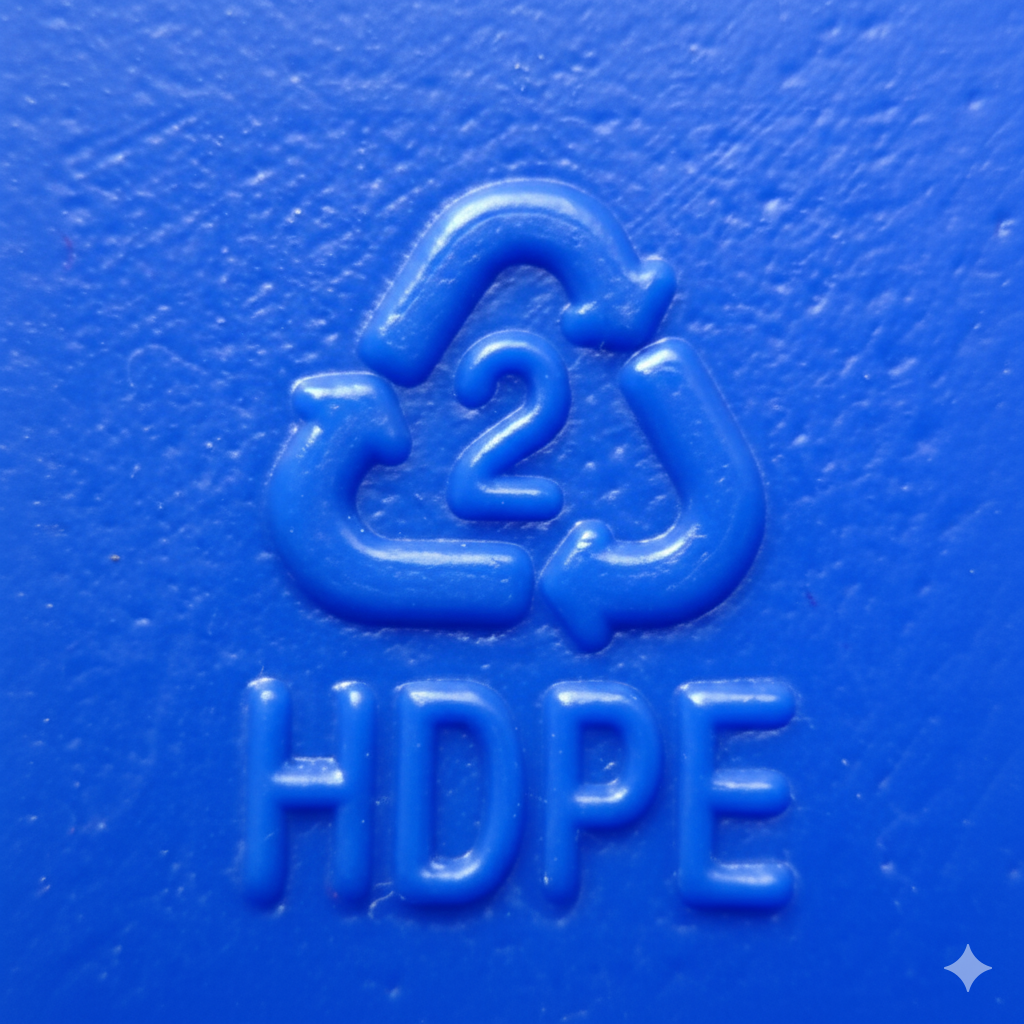
HDPE is resistant to many different solvents and has a wide variety of applications, including:
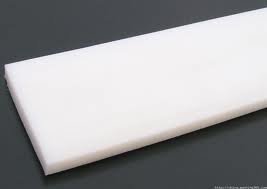
HDPE is also used for cell liners in subtitle D sanitary landfills, wherein large sheets of HDPE are either extrusion or wedge welded to form a homogeneous chemical-resistant barrier, with the intention of preventing the pollution of soil and groundwater by the liquid constituents of solid waste.
HDPE is preferred by the pyrotechnics trade for mortars over steel or PVC tubes, being more durable and safer. HDPE tends to rip or tear in a malfunction instead of shattering and becoming shrapnel like the other materials.
Milk jugs and other hollow goods manufactured through blow molding are the most important application area for HDPE – More than 8 million tons, or nearly one third of worldwide production, was applied here. In addition to being recycled using conventional processes, HDPE can also be processed by recyclebots into filament for 3-D printers via distributed recycling.
Above all, China, where beverage bottles made from HDPE were first imported in 2005, is a growing market for rigid HDPE packaging, as a result of its improving standard of living. In India and other highly populated, emerging nations, infrastructure expansion includes the deployment of pipes and cable insulation made from HDPE. The material has benefited from discussions about possible health and environmental problems caused by PVC and Polycarbonate associated Bisphenol A, as well as its advantages over glass, metal and cardboard.
High Density Polyethylene [wikipedia.org]
Introduction to Industrial Polyethylene: Properties, Catalysts, and Processes [Dennis Malpass (28 June 2010)]
“Municipal Solid Waste Generation, Recycling, and Disposal in the United States” [epa.gov]
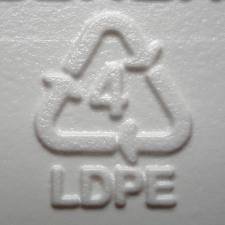
LDPE is defined by a density range of 0.910–0.940 g/cm3. It is not reactive at room temperatures, except by strong oxidizing agents, and some solvents cause swelling. It can withstand temperatures of 80 °C continuously and 95 °C for a short time. Made in translucent or opaque variations, it is quite flexible, and tough but breakable. LDPE has more branching (on about 2% of the carbon atoms) than HDPE, so its intermolecular forces (instantaneous-dipole induced-dipole attraction) are weaker, its tensile strength is lower, and its resilience is higher. Also, since its molecules are less tightly packed and less crystalline because of the side branches, its density is lower. LDPE contains the chemical elements carbon and hydrogen.
Plastic Properties of Low Density Polyethylene (LDPE) [Dynalab Corp.]
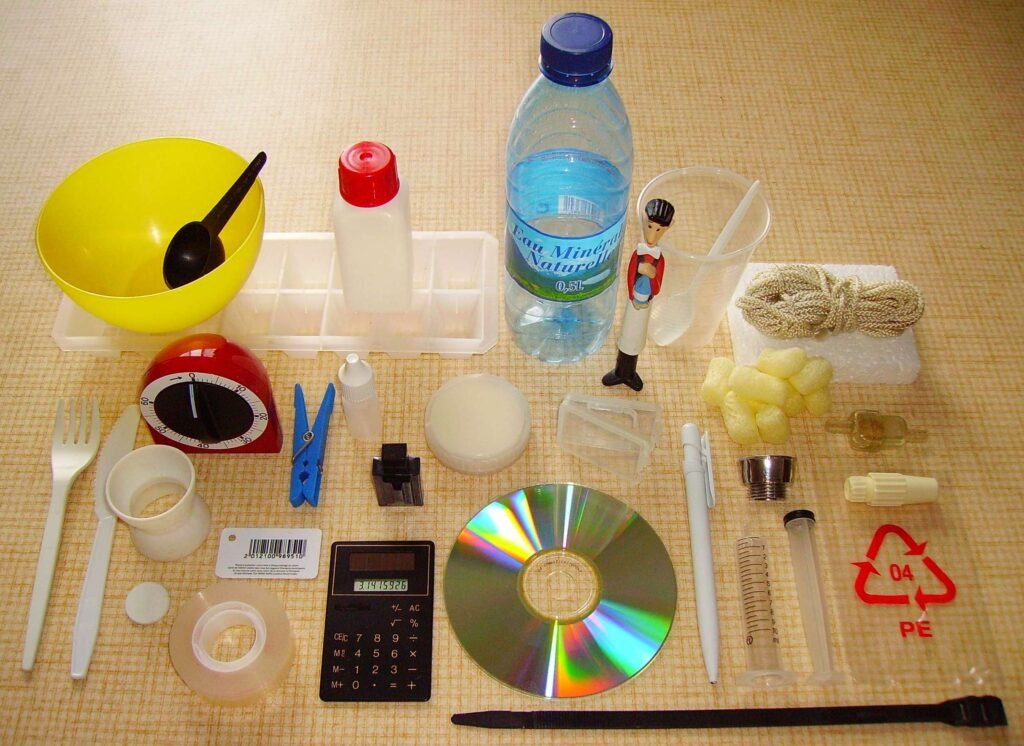
LDPE is widely used for manufacturing various containers, dispensing bottles, wash bottles, tubing, plastic bags for computer components, and various molded laboratory equipment. Its most common use is in plastic bags. Other products made from it include:
LDPE products and applications. [Exxon Mobil Corporation]
DOW LDPE 5004I. [IDES – The Plastics Web]
570-856-8909
24/7 Our Location
400 ISLANDPARK ROAD BUILDING # 3 EASTON PA 18042

Sign up for our newsletter and stay updated on the latest waste disposal tips, recycling trends, eco-friendly initiatives, and service updates.
| Days | Office Hours | Shipping Hours |
|---|---|---|
| Monday | 8:00 am – 4:00 pm | 7:30 am – 4:00 pm |
| Tuesday | 8:00 am – 4:00 pm | 7:30 am – 4:00 pm |
| Wednesday | 8:00 am – 4:00 pm | 7:30 am – 4:00 pm |
| Thursday | 8:00 am – 4:00 pm | 7:30 am – 4:00 pm |
| Friday | 8:00 am – 4:00 pm | 7:30 am – 12:00 pm |
© Copyright 2025. All rights reserved. Aaa Plastics And Paper Recycling Inc. Designed by Corridor Web Agency Pvt Ltd.